Everything in STEM begins with math
I have always believed that math is where STEM begins. Almost every advanced opportunity — physics, computing, engineering, research — sits on a mathematical foundation built years earlier. A student who reaches that foundation early has the freedom to explore what comes next; a student who reaches it late spends high school catching up.
That belief is why the curriculum carries students ahead of grade level, and why I have never treated math as just another subject.
I think of math as a mental sport
Talent is built through challenge, the way it is in any sport. And most people love a sport without ever competing in it — the same is true of mathematics. So the curriculum runs on two tracks. Accelerated Math is like physical education: every student builds strength and moves ahead. Math Olympiad is like a varsity team, for the student who enjoys the game enough to train seriously.
Some of those students compete. Most come for the challenge. Competition is a benchmark, never the point.
How the Olympiad curriculum is built
When I designed the problem-solving curriculum, I studied how mathematics is taught in the countries with the strongest traditions — the United States, Singapore, Korea, China, and Russia. I wanted a structure that carried a student through the school sequence and, at the same time, developed the kind of thinking school math rarely reaches.
That structure is what we call 20-40-40. In every lesson, about a fifth of the work is the hardest problems at the student's current grade. About two-fifths reaches into the next two grade levels, so the school sequence is always covered and always ahead. The rest is problem solving — unfamiliar questions drawn from national competitions, tuned to the AMC sequence. The proportions are deliberate: enough acceleration to stay ahead, enough problem solving to learn to think, enough current-grade difficulty to keep the foundation solid.
How a student learns it
Every lesson, in every course, is built the same five ways, in the same order, because each part depends on the one before it. Fluency comes first — automatic arithmetic frees a student's attention for the problem itself. Then skills, the procedures a student owns well enough to stop thinking about. Then problem solving, where a student learns to reason on unfamiliar ground. A short quiz separates following along from doing it alone. Homework turns understanding into mastery.
The shape never changes, so a student always knows the work — and the teacher spends the hour on judgment instead of a lesson plan.
Built once, taught every way
I built the curriculum on a simple principle: create the content once, and use it in many places. Every course is a single body of lessons, videos, and problems. It began as printed handouts in a classroom. The same content now runs our instructor-led classes and one-to-one tutoring, and a student can work through it at their own pace.
Because the curriculum underneath is the same, a student can move between them without starting over. Twenty years of teaching has gone into refining it, and it is still improving.
What I want it to do
Competition winners come out of this program, but that was never the goal. The goal is simpler: every student who comes through it becomes a stronger thinker, reaches the advanced courses early, and finds out how far their own ability can take them.
Math is where that begins.
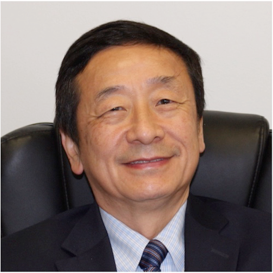
— Dr. James Li, Founder
Ph.D., Educational Psychology & Technology · University of Southern California